
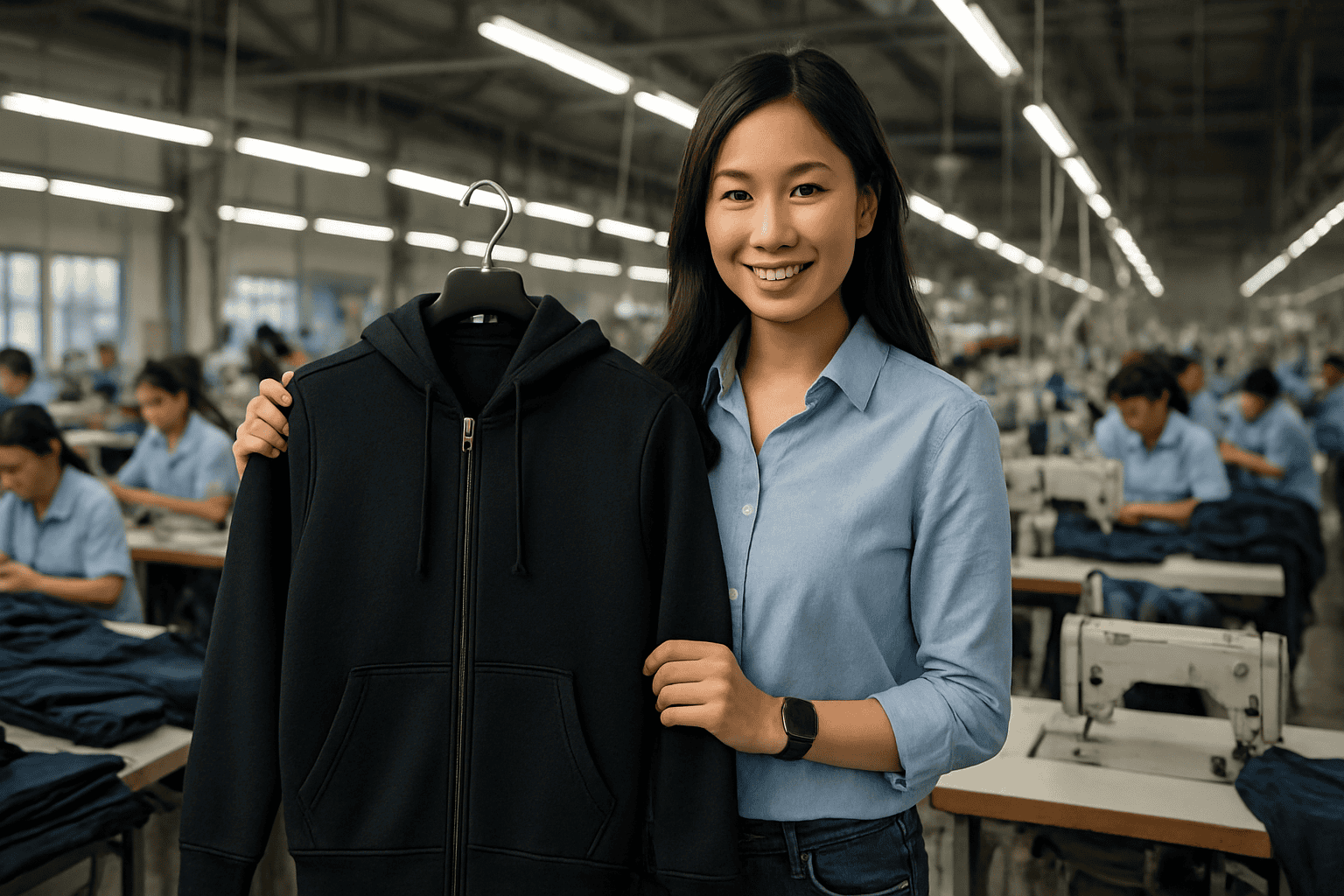
A garment order feels abstract until you see the floor it moves across. From cutting room to carton, every step either protects your order or quietly damages it. Here is the journey a 500-piece order takes through our Bandung facility, in the order it actually happens.
Pattern and marker planning
Before fabric moves, patterns are checked against the approved sample and a marker is planned: the layout that fits every panel onto the fabric with minimum waste. Digital pattern-making keeps each size consistent, and patterns are stored on file so your re-order in six months cuts the same garment.
Cutting
Fabric is relaxed, spread in controlled layers and cut to the marker. Pieces stay in bundles by size and colour, each with a ticket that follows it through sewing, so if anything drifts, it can be traced to the exact cut instead of guessed at.
Sewing and in-line checks
Bundles reach sewing lines that are balanced by operation, and quality checks happen on the line while the work is being done. Catching a crooked collar at the machine takes seconds. Finding the same fault at the end of the line means rework, or a garment you paid for and cannot sell.
Finishing, pressing and measuring
Sewed garments are trimmed, pressed and measured against the size chart, then compared with the approved sample. This is where hand feel and shape are locked in, and where most buyer disappointments are actually prevented.
Packing to your list
Pieces are tagged, polybagged and packed to the ratio on your packing list, cartons are marked for easy sorting, and weights are kept inside safe limits. A well-packed carton saves you hours at your own warehouse, which is part of the price even though nobody quotes it.
Documents and dispatch
The order leaves with a commercial invoice, packing list and bill of lading, prepared to match the cartons exactly. Clean documents clear customs on schedule. Sloppy ones can hold a shipment at port longer than the production itself took.
What this means for your order
When you compare lead times between factories, you are really comparing how well each stage is controlled. Sampling runs one to two weeks, bulk six to twelve depending on fabric. Ask any factory, including ours, which stages carry in-line checks and who signs them off. The answer tells you more than any price list.
Related Articles
- Non-Woven Garments: What They Are and Who Uses Them
- What Is FOB? Full-Service Manufacturing Explained for New Brands
- Garment Production Lead Times: What to Expect
- Woven Garments at Scale: Inside World KNK’s Bandung Factory (World KNK)